
The Dysphagia Decline Spiral: Why Hydration Support in SNF and LTC Requires More Than a Care Plan

When a resident struggles to drink, the problem may not be the prescribed fluid. It may be the interface between the resident, the cup, the caregiver, and the clinical plan.
In skilled nursing and long-term care, dysphagia is rarely an isolated swallowing problem. It can intersect with cognition, weakness, reduced upper-extremity function, impaired positioning, dependence for activities of daily living, fatigue, altered sensation, and the practical demands of assisted mealtimes.
For residents who rely on others to eat and drink, these factors can create a cascade: difficulty accessing fluids can contribute to reduced intake, reduced intake can increase the risk of dehydration and nutritional compromise, and declining strength and function can make eating and drinking even more difficult.
The question for SNF and LTC leaders is not simply whether hydration is being offered. It is whether residents have the practical means to access and consume fluids in a way that aligns with their individualized clinical plan.

Key Clinical Takeaways
- Dysphagia is highly prevalent in residential aged care and nursing home populations, making swallowing and hydration an important interdisciplinary quality-of-care issue. (PubMed)
- Dysphagia is associated with reduced ability to perform activities of daily living, reinforcing the importance of considering function and independence alongside swallowing physiology. (PubMed)
- Hydration interventions in long-term care can include environmental, behavioral, staffing, and practical strategies, not simply increasing the frequency with which fluids are offered. (PubMed)
- CMS guidance explicitly connects hydration with comprehensive assessment, care planning, resident preferences, sufficient fluids, and assisted nutrition and hydration. (Centers for Medicare & Medicaid Services)
- Adaptive equipment should complement, not replace, individualized assessment and dysphagia management by qualified clinicians.
The Dysphagia Decline Spiral
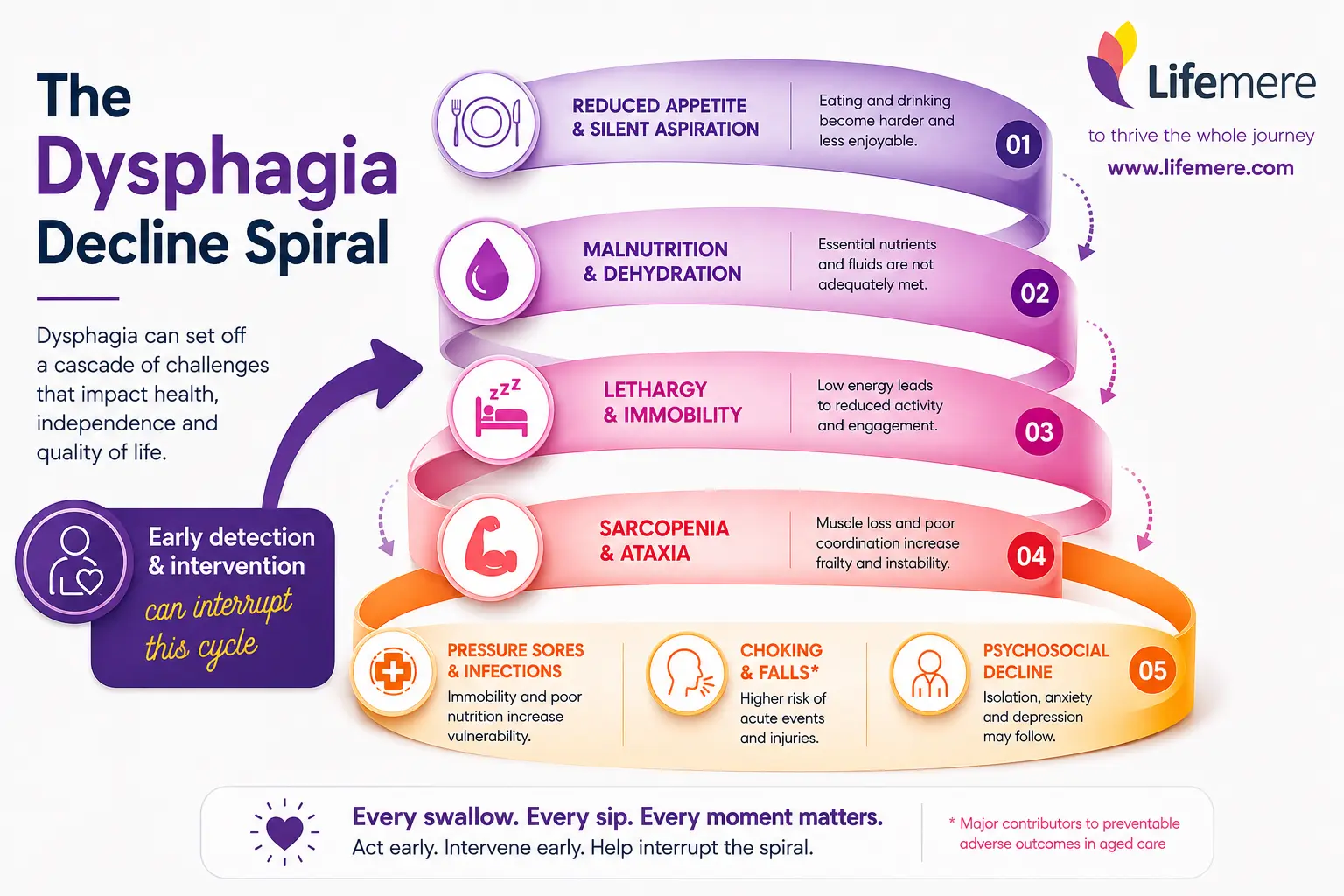
The Dysphagia Decline Spiral is a clinical communication concept illustrating how multiple challenges surrounding eating and drinking can interact and reinforce one another, proving a useful way to visualize a problem familiar to many clinicians.
When drinking becomes difficult, the consequences can extend well beyond the swallow itself.
A resident may have adequate access to fluids on paper, yet still struggle to achieve adequate intake because of:
- reduced grip strength
- tremor or impaired motor control
- cognitive impairment
- reduced initiation
- fatigue
- poor postural control
- limited range of motion
- difficulty coordinating cup-to-mouth movement
- dependence on caregivers
- difficulty managing prescribed fluid consistencies
- reduced ability to independently request or access drinks
- environmental or equipment barriers
These challenges can turn a seemingly simple intervention, such as “encourage fluids,” into a much more complex clinical and operational issue.
Dysphagia Is Also a Functional Issue
Dysphagia management is often appropriately focused on swallowing physiology, aspiration risk, diet and fluid modification, positioning, compensatory strategies and rehabilitation. But in residential care, the ability to execute the swallowing plan in real-world conditions matters just as much.
A 2024 systematic review and meta-analysis involving older adults found a significant association between dysphagia and reduced ability to perform activities of daily living. The authors reported an odds ratio of 3.39 for lower ADL ability among older adults with swallowing disorders, while also emphasizing that the available evidence does not establish causality. (PubMed)
This distinction is important. A resident may have a clinically appropriate swallowing recommendation, but if they cannot physically manipulate the recommended drinking vessel, maintain the required position, generate sufficient suction, control the bolus, or participate effectively in the drinking process, the care plan may become difficult to implement at the point of care.
That is where assistive technology deserves greater consideration.
Hydration Is Not Simply About Offering More Fluids
Dehydration is a recognized concern in nursing home populations. A systematic review of nursing home residents found reported dehydration prevalence ranging from 0.8% to 38.5%, with substantial variation depending on how dehydration was assessed. Cognitive impairment was among the factors significantly associated with dehydration in the reviewed studies. (PubMed)
Research examining hydration interventions in older adults also suggests that improving hydration is multifactorial. A systematic review and meta-analysis identified interventions involving different approaches to increasing fluid intake and examined outcomes including hydration and hydration-related events. (PubMed)
Similarly, a systematic review examining interventions to increase fluid intake among older adults living in long-term care identified modifiable environmental and care-related factors that can influence hydration. (PubMed)
The implication for facilities is significant: Hydration is a systems issue. It involves the resident, the clinical recommendation, the care environment, staff availability, preferences, assistance requirements, food and fluid consistency, positioning, equipment and the resident's ability to participate.
The Missing Piece: The Interface Between the Resident and the Drink
In many facilities, considerable attention is given to identifying the appropriate diet or fluid consistency. But what happens next? How does the resident actually receive the prescribed fluid? A standard cup may work extremely well for one resident and be poorly matched to another.
For a resident with tremor, reduced hand strength, impaired motor planning, limited neck control or dependence on assisted feeding, the cup itself can become a functional barrier.
This is where the conversation around assistive technology for dysphagia becomes important.
Rather than viewing adaptive equipment as an optional accessory, facilities can consider whether the drinking interface is appropriately matched to the resident's:
- swallowing physiology
- functional capacity
- positioning
- cognition
- motor control
- level of assistance
- prescribed fluid consistency
- desired degree of independence
- personal preferences
This approach also reinforces the role of the interdisciplinary team. Speech-language pathologists bring expertise in swallowing assessment and management. Occupational therapists can contribute important expertise regarding upper-extremity function, positioning, motor control, equipment selection and participation in activities of daily living. Nursing, dietetics, physicians and care staff each contribute essential perspectives to the resident's overall intake plan.
From Clinical Recommendation to Real-World Implementation
CMS guidance already emphasizes that hydration needs should be comprehensively assessed and incorporated into the resident's care plan, including consideration of hydration needs and preferences. CMS guidance also directs facilities to consider whether sufficient preferred fluids are provided and whether appropriate action is taken when residents refuse fluids. (Centers for Medicare & Medicaid Services)
The clinical opportunity is to take that thinking one step further: What if the barrier is not simply whether the fluid is available, but whether the resident can effectively access it? This is particularly relevant when a resident's needs change.
A person who once drank independently may develop Parkinson's disease, stroke-related weakness, dementia, arthritis, tremor, reduced endurance or another condition that changes their ability to manage a conventional drinking vessel. The clinical recommendation may remain appropriate. The equipment may no longer be.
Where Adaptive Drinking Technology Fits
The RoseCup® System was developed around this practical gap.
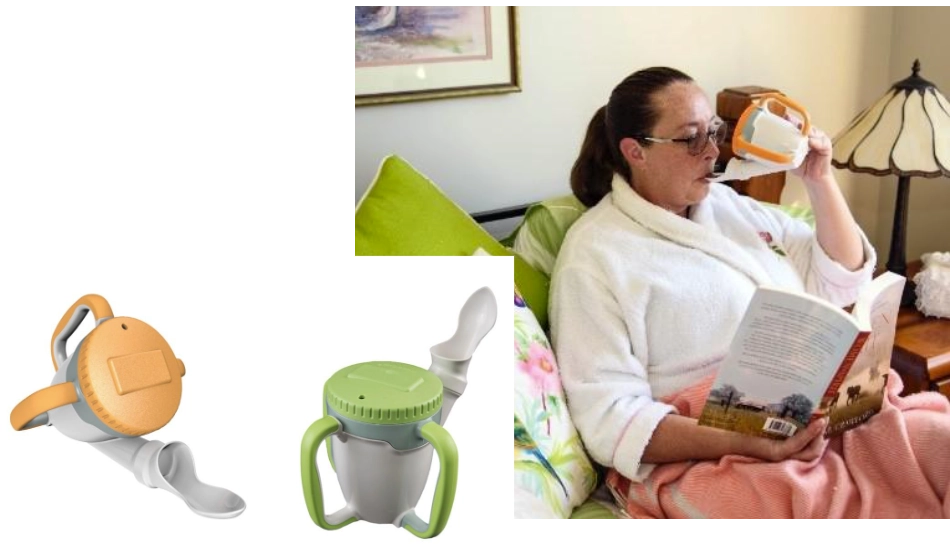
Rather than functioning as a single-purpose cup, RoseCup is a modular adaptive drinking system with interchangeable components that can be selected according to the individual's needs and clinical recommendations.
Configurations can provide different approaches to:
- drinking access
- flow control
- bolus volume
- positioning
- caregiver assistance
- independence
- thickened fluid delivery
The system's clinical materials describe its purpose as supporting dignity and independence, hydration and nutritional intake, individualized configuration and caregiver efficiency. The system also includes configurations designed for different levels of thickened fluids and mechanisms for flow or volume control. It can provide an adaptive interface between the resident and the prescribed drink, allowing the clinical team to consider whether the equipment itself can better support implementation of the care plan.
Learn more about the RoseCup® System
Breaking the Spiral Starts With the Practical Questions
For SNF and LTC leadership, improving hydration does not necessarily require another isolated program. It may begin with asking better questions:
Can this resident access the fluids we prescribe?
Can they physically manage the drinking vessel?
Are we matching equipment to functional ability as well as swallowing recommendations?
Could greater independence be supported?
Could caregiver assistance be made more practical?
When a resident's condition changes, does the equipment change with them?
These questions move the conversation from simply providing hydration to supporting successful hydration. That distinction matters. Because when eating and drinking become more difficult, the goal should not be limited to getting a prescribed volume of fluid into a resident. The broader goal is to support hydration, nutrition, function, dignity, participation and quality of life, while maintaining clinically appropriate swallowing management.
Break the Spiral. Support the Sip.
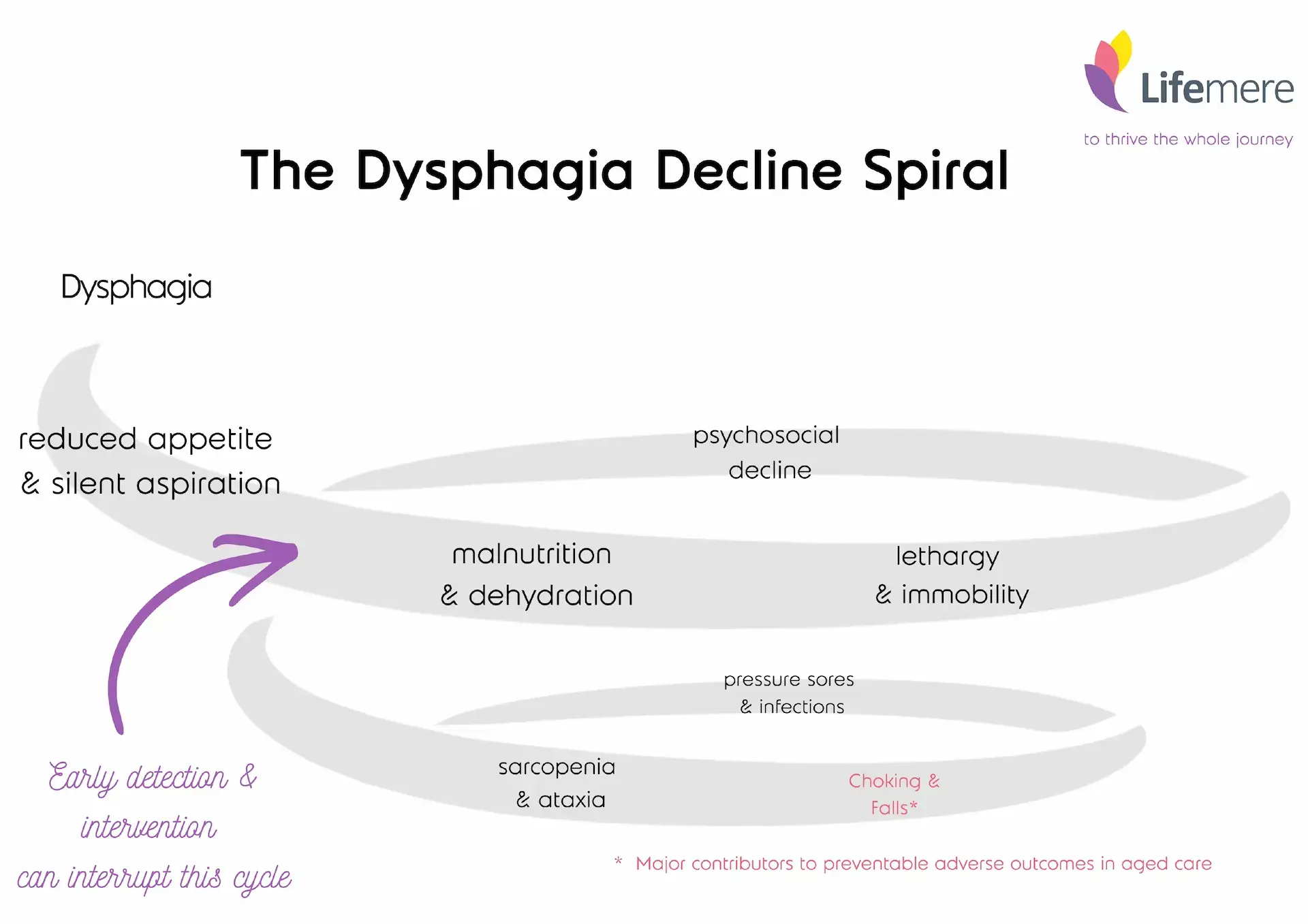
The dysphagia decline spiral reminds us that seemingly small barriers can become clinically meaningful when they occur repeatedly at every meal and every drink. For SNF and LTC communities, the opportunity is to look beyond the care plan and examine what happens at the bedside, at the table and in the resident's hands.
Sometimes the intervention is clinical. Sometimes it is environmental. Sometimes it is behavioral. And sometimes, the missing piece is simply the right tool. That is where adaptive technology can become part of a broader, person-centered approach to dysphagia and hydration management. Because supporting a resident's ability to drink is not just about the cup. It is about supporting the person who is using it.
A Clinical Note
RoseCup® is intended to support eating and drinking where an adaptive drinking interface is clinically appropriate. Selection and configuration should be guided by the resident's individual needs, swallowing assessment, prescribed diet and fluids, positioning, functional abilities and level of assistance. RoseCup® does not prevent aspiration and does not replace individualized dysphagia assessment, clinical management, or appropriate supervision.
About Lifemere
Lifemere is an Australian healthcare innovation company focused on developing practical solutions for people when eating and drinking becomes a challenge. Through the RoseCup® System, Lifemere aims to support hydration, nutrition, independence, participation and dignity across the whole journey.
Jessica Ackerman, MS,CCC-SLP, is a Speech-Language Pathologist and dysphagia specialist with more than 25 years of experience in swallowing disorders, neurological rehabilitation, digital health, and healthcare innovation. As a clinical consultant to Lifemere, she is passionate about advancing person-centered dysphagia care through education, innovation, and practical solutions that support hydration, participation, independence, and quality of life.
Link to relevant articles:
- Dysphagia Management Beyond Diet Modification: Reframing Clinical Goals Toward Hydration, Participation, and Quality of Life
- Assistive Drinking Devices: From Recommendation to Reality Will the Liquid Intake Plan Work in Everyday Life?
- RoseCup® System: Understanding the Components & Clinical Applications. Plus August Exclusive 15% Savings
The science of texture-modified foods and thickened
liquids has reached a point of excellence under the
leadership of the IDDSI (International Dysphagia Diet
Standardisation Initiative). The considerable efficiency
gap that remains in managing Dysphagia
lies in intake devices.
More than 10 companies worldwide manufacture intake
devices, but in some care sectors, more than 90% of
patients still use spoons and open cups!
Professionals and carers need education and training,
and the industry needs guidelines, research, and
stimulation to improve the design of intake devices.

Congratulations to the IDDSI launching for the first time in
Europe with its inaugural congress in Florence, Italy, on
February 27-28, 2025. It represents a significant milestone
in enhancing the quality of care for individuals with
swallowing difficulties in Europe.

Dr Gabriel Roux will represent Lifemere in Florencе.
Contact: gawie@lifemere.com or phone: +61 428 406 684
Frequently Asked Questions

-- / 5 average rating from -- reviews
We'd love to hear your thoughts!
Lorem ipsum dolor sit amet, consectetur adipiscing elit. Suspendisse varius enim in eros elementum tristique. Duis cursus, mi quis viverra ornare, eros dolor interdum nulla, ut commodo diam libero vitae erat. Aenean faucibus nibh et justo cursus id rutrum lorem imperdiet. Nunc ut sem vitae risus tristique posuere.
We'd love to hear your thoughts!
-- / 5 average rating from -- reviews
Lorem ipsum dolor sit amet, consectetur adipiscing elit. Suspendisse varius enim in eros elementum tristique. Duis cursus, mi quis viverra ornare, eros dolor interdum nulla, ut commodo diam libero vitae erat. Aenean faucibus nibh et justo cursus id rutrum lorem imperdiet. Nunc ut sem vitae risus tristique posuere. uis cursus, mi quis viverra ornare, eros dolor interdum nulla, ut commodo diam libero vitae era