
Upcoming Webinar: Adaptive Drinking Systems as an Early Intervention Strategy
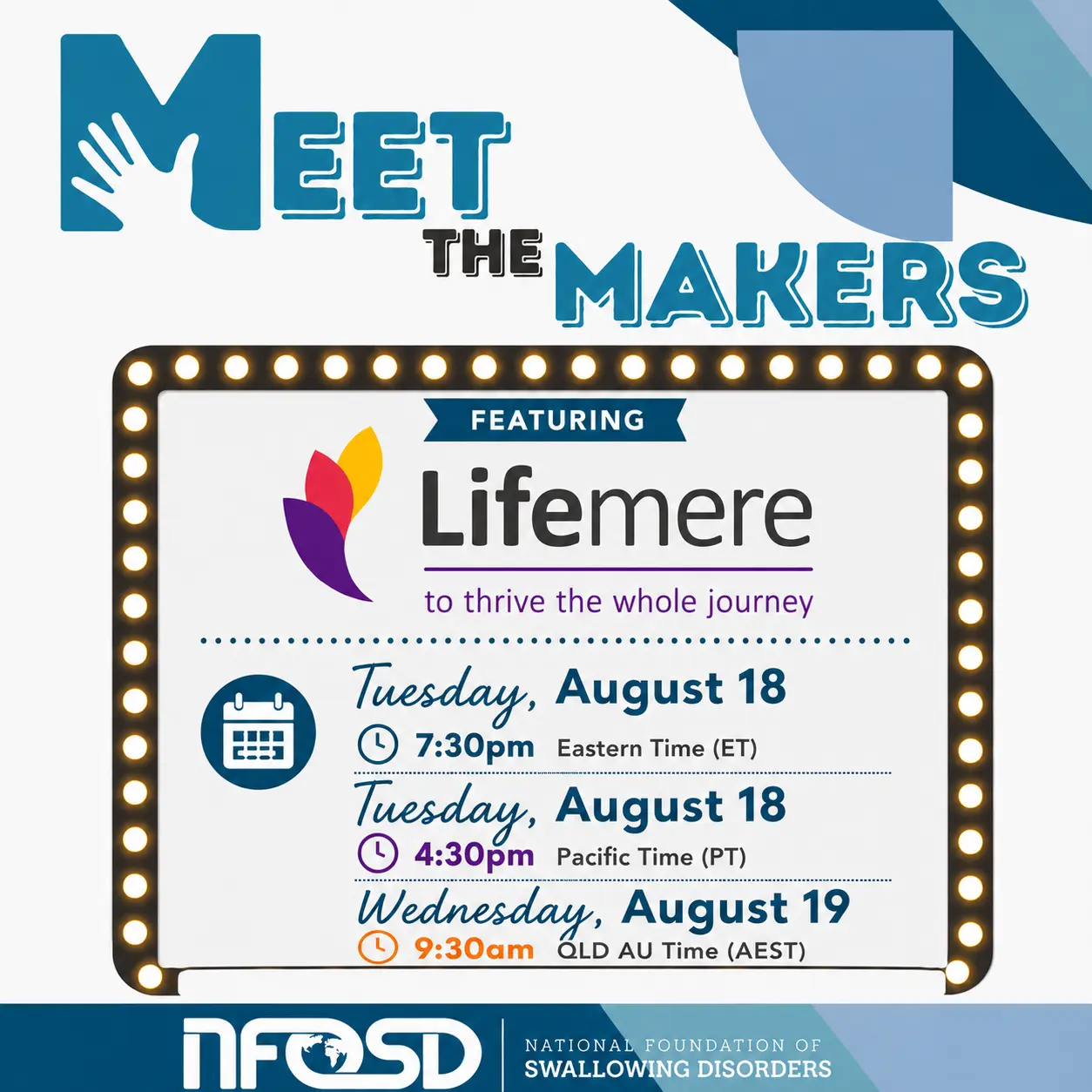
Meet the Maker: The Adaptable RoseCup® System
Clinical Application Today and AI-Supported Care Tomorrow
Key Clinical Takeaways
- Join Lifemere and the National Foundation of Swallowing Disorders (NFOSD) for an educational webinar exploring adaptive drinking systems within contemporary dysphagia management.
- Learn how the RoseCup® System may help support implementation of individualized swallowing recommendations across neurological and medically complex populations.
- Explore practical clinical applications through real-world case examples presented by Dr. Gabriël Roux and Jessica Ackerman, MS, CCC-SLP.
- Discover how adaptive technologies and emerging AI-supported screening tools may shape the future of dysphagia care.
- Register today to participate in this live discussion on hydration, person-centered care, and innovation in swallowing management.
Upcoming Webinar
Meet the Maker: The Adaptable RoseCup® System
Adaptive Drinking Systems as an Early Intervention Strategy: Clinical Application Today and AI-Supported Care Tomorrow
Presented in partnership with the National Foundation of Swallowing Disorders (NFOSD)
Wednesday, August 19 – 9:30am QLD AU Time (AEST)
Tuesday, August 18 – 7:30pm Eastern Time (ET)
Tuesday, August 18 – 4:30pm Pacific Time (PT)
Register here:
https://swallowingdisorderfoundation.com/meet-the-maker-lifemere/
As dysphagia management continues to evolve beyond aspiration prevention alone, clinicians are increasingly recognizing the importance of interventions that help patients successfully implement swallowing recommendations in everyday life. While instrumental assessment and rehabilitation remain foundational, maintaining hydration, nutrition, independence, and participation often depends on practical strategies that extend beyond the clinic.
Join Dr. Gabriël Roux, founder of Lifemere and developer of the RoseCup® System, and Jessica Ackerman, MS, CCC-SLP, Speech-Language Pathologist and Clinical Consultant for Lifemere, for an engaging discussion on how adaptive drinking systems may help support individualized dysphagia management today while complementing the future of AI-supported screening and longitudinal swallowing care.
What You'll Learn
During this interactive session, attendees will explore:
- Current evidence supporting individualized dysphagia management
- Practical clinical applications of adaptive drinking systems across neurological and medically complex populations
- How the RoseCup® System may help support controlled fluid intake, hydration opportunities, and person-centered participation during drinking tasks
- Case-based demonstrations illustrating integration into clinical practice
- Future opportunities for AI-supported dysphagia screening, longitudinal monitoring, and earlier intervention
- Clinical decision-making surrounding adaptive intake technologies within interdisciplinary care models
Rather than viewing adaptive drinking systems simply as assistive equipment, this discussion will explore how they may function as practical extensions of evidence-based dysphagia management that support real-world carryover beyond the therapy session.
Why This Conversation Matters
Emerging literature continues to support a broader understanding of dysphagia management that extends beyond aspiration prevention alone. Increasing attention is being directed toward hydration, nutritional status, adherence to recommendations, caregiver burden, participation, and long-term quality of life.
The World Health Organization's International Classification of Functioning, Disability and Health (ICF) similarly encourages healthcare professionals to evaluate not only impairment, but also activity, participation, and environmental factors that influence meaningful functional outcomes. https://www.who.int/standards/classifications/international-classification-of-functioning-disability-and-health
Likewise, the International Dysphagia Diet Standardisation Initiative (IDDSI) has transformed global practice by standardizing texture modification while emphasizing safe, individualized implementation across care settings. https://iddsi.org/
Despite these advances, relatively little attention has been devoted to adaptive intake technologies that may help patients successfully implement swallowing recommendations throughout daily life.
This webinar seeks to address that important clinical gap.
For decades, dysphagia management has appropriately focused on identifying physiological impairment, reducing aspiration risk, and implementing evidence-based compensatory and rehabilitative interventions. Yet many clinicians recognize a persistent challenge that extends beyond the instrumental assessment.
How do we help patients successfully implement our recommendations once they return home?
For individuals living with Parkinson's disease, stroke, ALS, dementia, multiple sclerosis, frailty, and other neurological conditions, maintaining adequate hydration is often one of the greatest barriers to long-term swallowing success. Functional limitations such as tremor, weakness, fatigue, impaired coordination, reduced cervical mobility, and caregiver dependence frequently influence drinking performance as much as the swallowing impairment itself.
As dysphagia management continues to evolve toward person-centered, participation-focused models of care, clinicians are increasingly recognizing the value of practical adaptive technologies that may help bridge the gap between clinical recommendations and everyday implementation.
These concepts will be explored during an upcoming educational webinar presented in partnership with the National Foundation of Swallowing Disorders (NFOSD).
About the RoseCup® System
The webinar will feature the RoseCup® System, Lifemere's adaptable intake system designed to support individualized drinking across a range of neurological and medically complex populations.
The RoseCup® System offers configurable attachments, controlled flow options, ergonomic handling, and compatibility with thickened liquids prescribed under the IDDSI Framework. These features may help support implementation of individualized dysphagia recommendations by promoting more controlled fluid intake, supporting accessibility, reducing caregiver burden, and encouraging greater participation during hydration and mealtime activities.
Learn more about the RoseCup® System: https://www.lifemere.com/education/the-rosecup-system
The RoseCup® System is registered as a Class I Medical Device with the Australian Therapeutic Goods Administration (TGA).
Lifemere is also a preferred supplier for Australian Health and Aged Care (AHAC) and proudly served as a 2025 global sponsor of IDDSI, supporting worldwide implementation of standardized dysphagia management.
Who Should Attend
This webinar is designed for:
- Speech-Language Pathologists
- Neurologists
- Primary Care Physicians
- Geriatricians
- Rehabilitation Physicians
- Occupational Therapists
- Nurses
- Dietitians
- Physiotherapists
- Home Health Professionals
- Students and Researchers
- Caregivers interested in evidence-informed dysphagia management
Registration:
https://swallowingdisorderfoundation.com/meet-the-maker-lifemere/
We look forward to welcoming you for an engaging discussion on innovation, individualized care, and the future of swallowing management.
Successful dysphagia management is measured not only by safer swallowing, but by helping people maintain hydration, dignity, independence, and participation throughout the course of their disease.
Jessica Ackerman, MS,CCC-SLP, is a Speech-Language Pathologist and dysphagia specialist with more than 25 years of experience in swallowing disorders, neurological rehabilitation, digital health, and healthcare innovation. As a clinical consultant to Lifemere, she is passionate about advancing person-centered dysphagia care through education, innovation, and practical solutions that support hydration, participation, independence, and quality of life.
Link to relevant articles:
- Dysphagia Management Beyond Diet Modification: Reframing Clinical Goals Toward Hydration, Participation, and Quality of Life
- Dysphagia Awareness Month 2026: Expanding the Conversation Beyond Aspiration to Functional Living and Assistive Technology
- Bridging the Gap Between Clinical Recommendations and Everyday Drinking: Why the RoseCup® System Deserves a Place in Contemporary Dysphagia Management
The science of texture-modified foods and thickened
liquids has reached a point of excellence under the
leadership of the IDDSI (International Dysphagia Diet
Standardisation Initiative). The considerable efficiency
gap that remains in managing Dysphagia
lies in intake devices.
More than 10 companies worldwide manufacture intake
devices, but in some care sectors, more than 90% of
patients still use spoons and open cups!
Professionals and carers need education and training,
and the industry needs guidelines, research, and
stimulation to improve the design of intake devices.

Congratulations to the IDDSI launching for the first time in
Europe with its inaugural congress in Florence, Italy, on
February 27-28, 2025. It represents a significant milestone
in enhancing the quality of care for individuals with
swallowing difficulties in Europe.

Dr Gabriel Roux will represent Lifemere in Florencе.
Contact: gawie@lifemere.com or phone: +61 428 406 684
Frequently Asked Questions

-- / 5 average rating from -- reviews
We'd love to hear your thoughts!
Lorem ipsum dolor sit amet, consectetur adipiscing elit. Suspendisse varius enim in eros elementum tristique. Duis cursus, mi quis viverra ornare, eros dolor interdum nulla, ut commodo diam libero vitae erat. Aenean faucibus nibh et justo cursus id rutrum lorem imperdiet. Nunc ut sem vitae risus tristique posuere.
We'd love to hear your thoughts!
-- / 5 average rating from -- reviews
Lorem ipsum dolor sit amet, consectetur adipiscing elit. Suspendisse varius enim in eros elementum tristique. Duis cursus, mi quis viverra ornare, eros dolor interdum nulla, ut commodo diam libero vitae erat. Aenean faucibus nibh et justo cursus id rutrum lorem imperdiet. Nunc ut sem vitae risus tristique posuere. uis cursus, mi quis viverra ornare, eros dolor interdum nulla, ut commodo diam libero vitae era